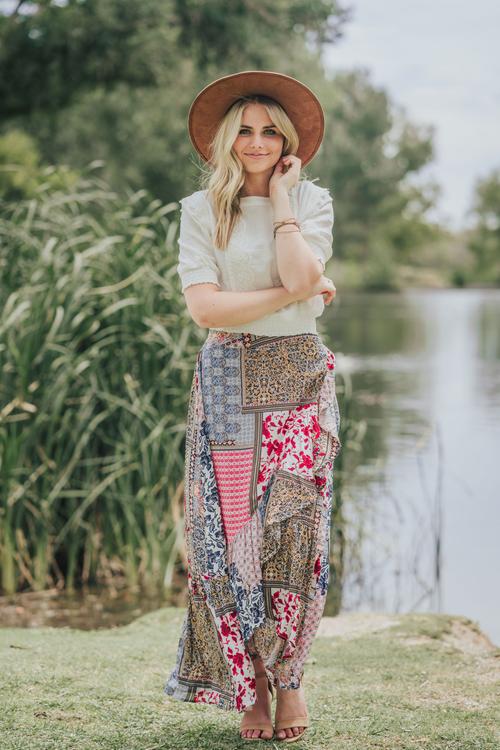
The term “modest” may have varied interpretations across religious boundaries and even within them. Commonalities can also exist; for example, many Christian, Jewish, and Muslim women practice the veiling of their head, with Christian women wearing a headcovering, Jewish women wearing a tichel, and Muslim women wearing a hijab.[2][3][4]
“There’s a general misconception that modest clothing is inherently oppressive,” said Michelle Honig, an Orthodox Jewish fashion journalist and the keynote speaker during fashion month at New York University for the Meeting Through Modesty fashion symposium. “But if women in so-called ‘liberated countries’ still choose to cover their bodies, then they have made a choice. They have agency.”[5]
Modest fashion across religions expresses consensus that it should not be experienced as a limiting factor in style. Brands are churning out designs and collections that an orthodox Muslim, Jew, Christian, Hindu can wear in style. Dolce & Gabbana, H&M, and Uniqlo are just a few names that have entered the modest fashion segment, making clothes that cover most parts of the body while allowing women to experiment with the latest trends.[when?]
In late 2018, modest fashion was considered a 250 billion dollar industry[6]
This growing phenomenon has been studied by scholars such as British professor Reina Lewis from London College of Fashion. Among her works on the topic we can mention ‘Modest Fashion: Styling Bodies, Mediating Faith’ (2013) and ‘Muslim Fashion: Contemporary Style Cultures’ (2015).[7][8]
https://en.wikipedia.org/wiki/Modest_fashion
https://www.youtube.com/watch?v=5VCQNwx_Z64
 yasasi's blog